Diesel Van Maintenance Guide: How to Extend Engine Life in Fiat, Peugeot & Citroën Vans
This guide covers the most common diesel engine problems in Fiat Ducato, Peugeot Boxer and Citroën Relay commercial vans. It explains why faults develop, what the warning signs look like, and how consistent preventive servicing reduces long-term repair costs for Brisbane trades and fleet operators.
A well-maintained diesel van is one of the most reliable tools a Brisbane tradie or fleet operator can have. The Fiat Ducato, Peugeot Boxer and Citroën Relay all share the same platform and engine architecture, and when properly serviced, these engines are genuinely durable. The 2.3L Multijet engine found in older models has been documented reaching 300,000 to 400,000 kilometres in fleet use. Newer 2.2L units, introduced across the Stellantis platform from 2022, are capable of 400,000 to 500,000 kilometres with consistent maintenance.
The catch is that word: consistent. Modern diesel vans carry emissions systems, electronic sensors, turbochargers and high-pressure fuel systems that all interact constantly. When one area starts struggling, the stress transfers to adjacent systems. A partially blocked DPF puts more soot into the EGR circuit. A dirty EGR valve restricts airflow and puts more heat through the turbo. Problems compound quietly, often for months, before anything obvious appears.
Most engine failures we see at East Coast Commercial Service Centre did not happen suddenly. In nearly every case, there were warning signs that went unaddressed.
Diesel Vans Last Longer When Small Problems Are Handled Early
Most diesel engine failures do not happen without warning. The engine has usually been showing smaller signs for months before serious damage develops. The challenge is that many early symptoms feel manageable. Drivers continue operating the van because it still gets the job done.
Common early indicators include increased fuel consumption, rough idling, slower acceleration, excessive exhaust smoke, warning lights appearing intermittently, hard starting and reduced throttle response. Any one of these on its own might not raise alarm. Several appearing together usually means something is developing.
The businesses we see with the lowest repair bills are not the ones with the newest vans. They are the ones with the most consistent service records.
Why Preventive Maintenance Matters in Commercial Vans
Stop-start traffic, short trips, heavy loads and repeated cold starts all accelerate wear across emissions systems. DPF regeneration requires sustained heat, which short urban trips rarely allow. EGR valves clog faster when the engine spends more time at low temperatures and low revs. These are predictable results of driving conditions that push the engine outside the operating range it needs to stay clean.
The Cost of Delaying Minor Repairs
An EGR clean at the right interval costs a few hundred dollars. An EGR cooler replacement on a 2016 to 2019 twin-EGR Boxer or Relay, which specialists have documented costing upwards of $3,000, is what happens when that clean gets skipped. A DPF that needed a forced regeneration and was ignored can end up needing full replacement, which costs significantly more again.
Reactive repairs almost always cost more than the preventive work that would have avoided them. The interconnected nature of modern emissions systems makes this especially true for these vans.
Understanding the Most Common Diesel Engine Problems
The Fiat Ducato, Peugeot Boxer and Citroën Relay share a platform and, increasingly, the same engine. The Euro 6 emissions generations are worth understanding because maintenance needs differ between them: Euro 5 (2011-2016) uses a single EGR with no AdBlue; Euro 6 twin-EGR (2016-2019) is the most fault-prone generation; Euro 6d (2021 onwards) drops the twin EGR and uses AdBlue and SCR instead.
| System | Common Fault | Primary Cause | Typical Symptom |
|---|---|---|---|
| EGR Valve | Carbon build-up, seizure | Short trips, urban driving | Limp mode, rough idle, smoke |
| DPF | Soot blockage | Incomplete regeneration cycles | Warning light, power loss |
| Turbocharger | Bearing wear, oil contamination | Delayed oil changes, dirty oil | Whining noise, blue smoke |
| AdBlue/SCR | Sensor faults, injector failure | Contamination, neglect | Warning light, limp mode |
| Fuel Injectors | Wear, contamination | Skipped fuel filter changes | Rough running, poor economy |
| Cooling System | Pressure loss, leaks | Age, neglected inspections | Overheating, coolant loss |
EGR Carbon Build-Up
The EGR valve recirculates exhaust gas back through the intake to reduce nitrogen oxide emissions. In an engine doing mostly urban work, soot accumulates inside the valve and intake manifold over time. The valve can eventually seize, either open or closed. Both cause different but serious problems.
On the Euro 6 twin-EGR engines used in Boxers and Relays between 2016 and 2019, there are two EGR circuits, both of which need monitoring. Fault codes P0401 and P0402 specifically indicate EGR flow problems. Regular inspection and cleaning at appropriate intervals is one of the most cost-effective things you can do for one of these engines. For more on what carbon build-up looks like internally, see our post on carbon build-up and engine cleaning.
DPF Blockages From Short Trips
Diesel particulate filters trap soot from combustion. They need periodic regeneration, a process where accumulated soot is burned off at high exhaust temperatures. On the 2016 to 2019 twin-EGR platform, active regeneration is needed roughly every 400 to 700 kilometres. Vans doing short urban rounds may never complete a full cycle.
When regeneration cannot complete, soot levels climb until the system triggers a fault (P2463 is the standard DPF restriction code). Ignoring the DPF warning at this point risks the filter becoming permanently blocked and requiring replacement rather than cleaning.
Turbocharger Wear and Oil Contamination
Turbochargers spin at up to 200,000 rpm and rely entirely on clean, correctly pressured oil for lubrication and cooling. Delayed oil changes allow contaminants to build. Degraded oil loses its ability to protect the turbo bearings. Once internal wear begins, metal particles enter the oil circuit and the damage spreads through nearby systems.
AdBlue System Faults
Post-2019 Euro 6d engines across this platform use AdBlue injected into the exhaust to reduce NOx emissions. Sensor faults, injector failures and contamination are the most common issues. AdBlue faults will trigger warning lights and, if left unresolved, put the engine into a reduced-power mode. These are diagnosable and usually straightforward to fix when caught early.
Why Diesel Servicing Intervals Matter
The manufacturer's service interval is a minimum for average conditions. For a commercial van doing urban delivery rounds, heavy cargo work or stop-start driving in Brisbane traffic, average conditions do not apply. Engine oil in a hard-working commercial diesel degrades faster than in a privately used vehicle. Heat cycles, fuel dilution from short trips and soot contamination all shorten oil life.
| Vehicle Use | Recommended Frequency | Oil Change Guidance |
|---|---|---|
| Light use, mostly highway | Manufacturer interval | As per logbook |
| Mixed urban and highway | Every 10,000 km or 6 months | Earlier than logbook if hard use |
| Heavy urban commercial | Every 7,500 to 10,000 km | 6-month maximum regardless of km |
| Fleet vehicles, multiple drivers | Every 6 months minimum | Condition-based, not odometer-only |
Commercial vans operating daily workloads usually require closer monitoring than privately owned vehicles. Heat, traffic conditions, towing, cargo weight and extended idle time all increase stress on the engine and oil system. Waiting too long between services allows contaminants to build inside the engine, affecting turbochargers, injectors and emissions components.
A modern Ducato, Boxer or Relay is capable of half a million kilometres. Whether it gets there depends almost entirely on what happens between services, not during them.
The Importance of EGR Cleaning in Diesel Vans
Carbon build-up inside the EGR valve and intake manifold is one of the most consistent problems we see in Brisbane commercial vans. It develops slowly and often goes unnoticed until performance has already dropped. The process is gradual: soot accumulates on the valve walls, airflow becomes slightly restricted, the engine compensates, fuel consumption creeps up. Then one day the valve sticks, or the engine drops into limp mode, and the van is off the road.
Inspecting and cleaning the EGR system every 60,000 to 80,000 kilometres is a practical standard for vans in heavy urban use. For vans on shorter cycles doing multiple daily starts, earlier is better.
The EGR valve on a twin-EGR Euro 6 Boxer is the single most fault-prone component we see in urban fleet vans. Cleaning it on schedule costs a fraction of replacing the cooler after it seizes.– East Coast Commercial Service Centre
Symptoms of EGR Problems
Reduced fuel efficiency is often the first sign, because it is easy to attribute to something else. Other indicators include hesitation under acceleration, rough idling, increased exhaust smoke and intermittent engine warning lights. A stuck-open EGR valve on a twin-EGR Boxer or Relay can cause carbon to migrate into the intake manifold and coat the intercooler. By the time the vehicle enters limp mode, the repair scope has often expanded well beyond the valve itself.
Turbocharger Maintenance and Long-Term Engine Reliability
A healthy turbocharger is one of the clearest indicators of a well-maintained diesel engine. The bearings inside a turbo are lubricated by a continuous supply of clean engine oil. When that oil is changed on schedule and kept clean, turbos in these engines are robust. When oil changes are delayed or oil quality degrades, the bearings wear and metal particles circulate through the oiling system.
Warning Signs of Turbo Problems
A whining or whistling noise that increases under acceleration is the most recognisable symptom. Blue or grey smoke from the exhaust can indicate oil entering the intake through a worn turbo seal. A noticeable drop in power or throttle response without a corresponding fault code is also worth investigating early. Catching turbo wear before bearing failure is the difference between a service item and a major repair.
Turbocharger replacement on a Fiat Ducato or Peugeot Boxer is not a small job. A turbo that fails and sends metal debris through the engine can require a full engine rebuild in a worst-case scenario. Early inspection is the only reliable way to avoid that outcome.
Managing AdBlue and Emissions System Problems
Post-2019 vans across this platform use selective catalytic reduction with AdBlue rather than the earlier twin-EGR approach. AdBlue needs to be topped up regularly and stored correctly. Contaminated or degraded AdBlue causes injector and sensor faults. The system also relies on accurate temperature data from the exhaust, so sensor faults upstream can trigger false AdBlue warnings.
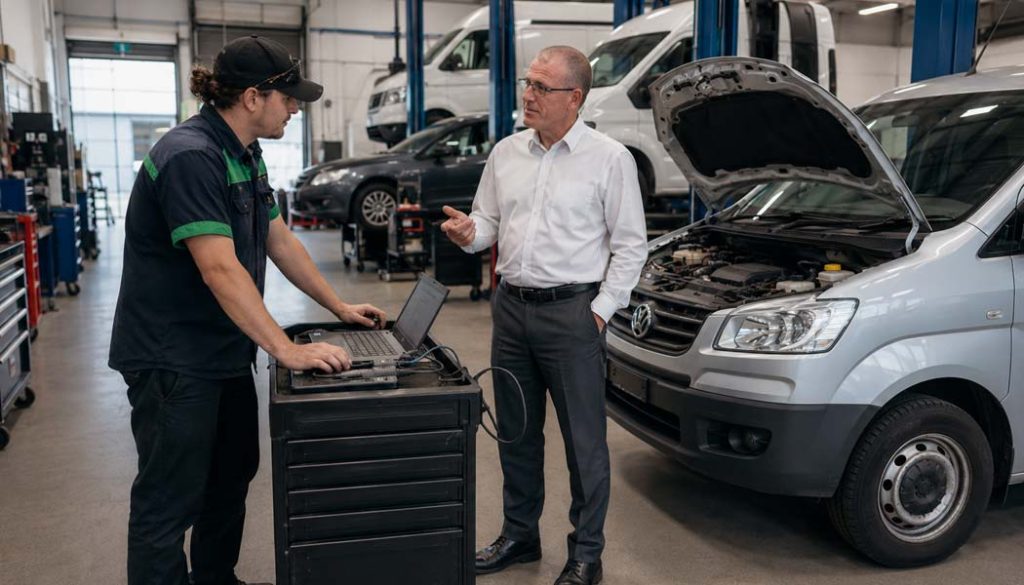
Generic OBD readers often miss Fiat and PSA-specific fault codes. The correct diagnostic approach for these platforms requires manufacturer-specific software that reads live data streams from individual sensors, not just logged fault codes. This is the difference between finding the actual cause and clearing a warning light that returns within days. Our Peugeot and Citroën servicing uses platform-specific diagnostic tools for exactly this reason.
How Driving Habits Affect Diesel Engine Life
The way a van is driven has a significant impact on how quickly wear accumulates. Two identical vans on different duty cycles will have very different maintenance profiles by 100,000 kilometres. A Brisbane trades van doing six to ten suburban stops a day is running its engine hard in the way that matters most to emissions systems.
| Driving Pattern | DPF Risk | EGR Risk | Recommended Action |
|---|---|---|---|
| Mostly highway, long runs | Low | Low | Standard manufacturer intervals |
| Mixed urban and highway | Medium | Medium | Reduce oil interval by 20% |
| Urban only, short trips | High | High | More frequent servicing, periodic highway run |
| Heavy idling, construction sites | High | Medium | Time-based intervals, not odometer-only |
Short Trips and DPF Regeneration Problems
A DPF warning on a van doing mostly short trips is almost always a regeneration problem, not a filter failure. The fix can be as simple as a 30 to 40 minute run at highway speed. If the warning has been ignored for long enough, a workshop-forced regeneration may be needed. If it has been ignored even longer, you may be looking at filter replacement.
Why Engine Warm-Up Time Still Matters
Modern diesel engines do not need the extended warm-up periods older engines required, but they do need to reach operating temperature before being worked hard. Pulling away under full load immediately after a cold start puts thermal stress on turbocharger components before the oil is fully up to temperature and pressure. Allowing one to two minutes before driving under heavy load costs nothing and protects the turbo.
Quick Check: Is Your Van at Risk?
Tick any statements that apply to your van. Three or more ticks is a signal worth acting on before it becomes a repair bill.
What Preventive Diesel Maintenance Should Include
Preventive servicing for a modern commercial diesel van covers more than oil and filters. The interconnected nature of these systems means a thorough inspection needs to look across multiple areas.
Routine diagnostic scanning captures developing faults before they become active failures. Many sensor and system faults log codes weeks before any visible symptom appears.
Oil and filter changes at intervals appropriate to actual operating conditions, not just odometer readings. Full synthetic oil to the correct ACEA specification is not optional on these engines.
EGR inspection and cleaning on a schedule matched to how the van is used. Urban-heavy use means earlier and more frequent attention, typically every 60,000 to 80,000 kilometres.
Turbocharger performance check including oil pressure, inlet condition and bearing assessment. Catching early-stage wear before bearing failure is the difference between a service item and a major rebuild.
DPF status check including soot load reading and regeneration history. A DPF that has not completed a clean regeneration cycle in months is a problem waiting to announce itself.
Cooling system pressure and integrity inspection to identify leaks or pressure loss before overheating occurs. Battery and charging system checks matter more than many operators realise, because emissions systems are electrically demanding and a weak battery can cause false sensor faults.
If your van is due for a service or showing any of the warning signs covered above, our team can run a full diagnostic inspection. Book with East Coast Commercial Service Centre in Acacia Ridge and get a clear picture of where your van stands before a small issue becomes an expensive one.
Book a ServicePreventive Maintenance Helps Reduce Fleet Downtime
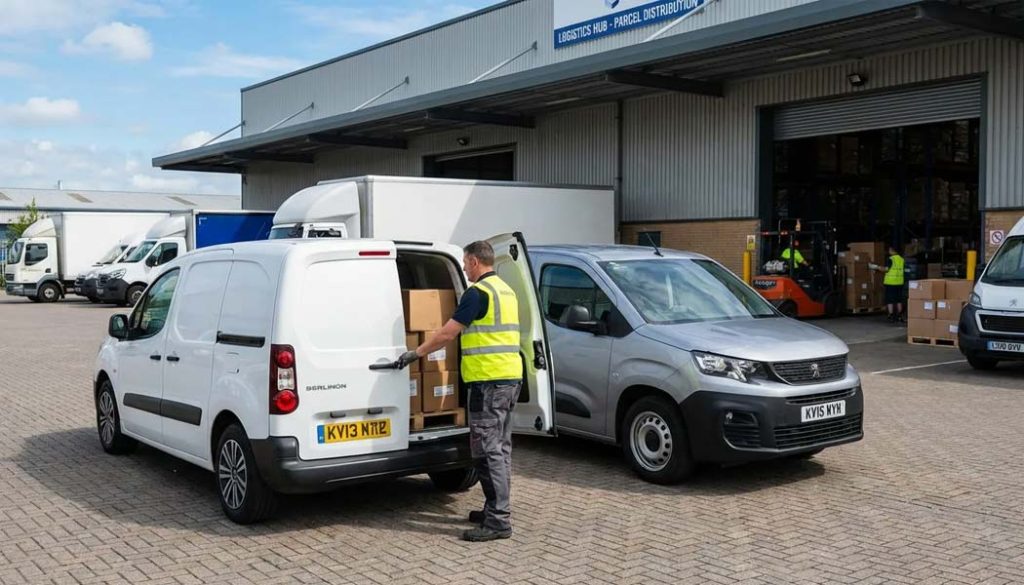
For fleet operators, the cost of a van off the road is not just the repair bill. It is the missed jobs, the rescheduled work, the hire vehicle if one is needed and the overhead of managing an unplanned breakdown. Preventive servicing makes costs predictable. Reactive repairs do not.
Reactive repairs are usually more expensive because the underlying problem has already escalated. Once major engine damage develops, downtime becomes harder to control and costs increase quickly. The vans we service most reliably are the ones on structured schedules. Those owners know when each vehicle is coming in, what will be inspected and approximately what it will cost.
Modern diesel engines in this platform are built for longevity. The limiting factor is rarely the engine itself. It is almost always the maintenance history around it. For fleet operators wanting a structured approach, our commercial vehicle servicing is designed around exactly that kind of consistency.
Frequently Asked Questions
How often should diesel commercial vans be serviced?
For vans in heavy urban commercial use, every 7,500 to 10,000 kilometres or every six months is a practical guide. Manufacturer intervals are set for average conditions. Commercial stop-start driving in Brisbane traffic is not average conditions, and service timing should reflect that.
What causes DPF blockages in commercial vans?
Repeated short trips that prevent the engine reaching and sustaining full operating temperature are the main cause. The DPF needs sustained heat to burn off accumulated soot through active regeneration. Vans that rarely exceed 20 kilometres per trip often cannot complete a full regeneration cycle.
Why is EGR cleaning important in diesel engines?
Carbon deposits accumulate inside the EGR valve and intake system over time, particularly in urban-driven vans. As build-up increases, airflow becomes restricted, combustion efficiency drops and the risk of the valve seizing grows. Cleaning at the right interval prevents a minor maintenance item from becoming a significant repair.
Can delayed oil changes damage a turbocharger?
Yes. Delayed oil changes and using the wrong oil specification are the leading causes of premature turbocharger wear on these engines. The turbo bearings rely entirely on clean, correctly pressured oil. Once bearing wear begins, metal contamination can spread through the engine oiling system.
What are common warning signs of diesel engine problems?
Reduced power, increased fuel consumption, rough idling, warning lights (particularly DPF, EGR or AdBlue-related), unusual exhaust smoke and sluggish throttle response are the most common early indicators. A van that drops into limp mode, even once, should be inspected promptly rather than reset and returned to service.
East Coast Commercial Service Centre specialises in Fiat, Peugeot and Citroën commercial van servicing at our workshop in Acacia Ridge, Brisbane. Whether your van needs a routine service, a diagnostic inspection or a specific repair, our team has the platform-specific tools and experience to get it right. Book a service online or call us on (07) 3276 4733.
Other posts you will find helpful