Van Brake Wear Brisbane: What Fleet Operators Need to Know
Commercial vans wear through brake components far faster than cars. Load weight, stop-start delivery routes, Brisbane's urban traffic density and long daily operating hours all combine to accelerate brake wear in ways most fleet operators underestimate until something goes wrong. This post explains exactly why, what to watch for, and what a proper brake servicing schedule should look like for Fiat, Peugeot and Citroën commercial vans.
The NHVR's 2024 National Roadworthiness Survey inspected 9,082 commercial vehicles across Australia, the largest inspection exercise ever conducted. The most common defect found, ahead of engine, steering and suspension issues, was brakes. One in four vehicles failed inspection entirely. Brakes were the leading reason.
That figure is not surprising to anyone who works on commercial vehicles regularly. Brake wear in a fully loaded delivery van operating Brisbane suburban routes is nothing like brake wear in a private car. The physics are different, the operating conditions are different, and the maintenance requirements are different. What catches fleet operators out is assuming the two are comparable.
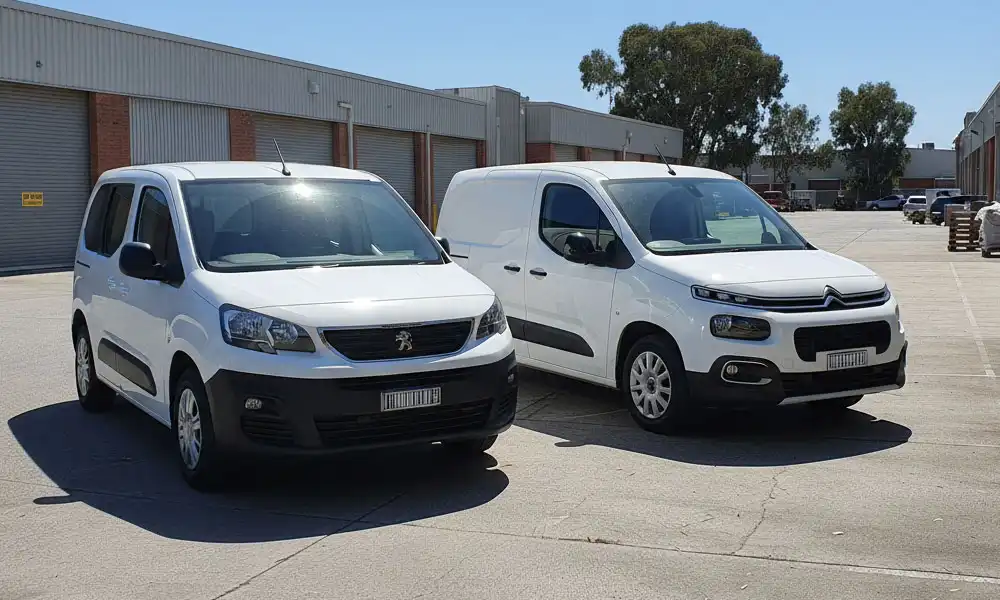
For Fiat Ducato, Peugeot Boxer and Citroën Relay operators, brake servicing is particularly important because these vans are frequently used at or near their maximum payload capacity. Our commercial vehicle servicing covers brake inspection as a standard item at every service, not as an optional add-on.
The National Brake Problem: What the Data Shows
The NHVR has been conducting National Roadworthiness Surveys since 2016. In that first survey, 45% of vehicles failed. By 2021 and 2024, that figure had improved to 25%. Progress, but still one in four vehicles carrying a defect at roadside inspection. Brakes have been the top defect category in every survey. In 2024, the NHVR specifically noted its disappointment that brake defects remain the leading issue across Australia's commercial fleet.
These are not just regulatory compliance statistics. A brake defect in a fully loaded commercial van doing 60 km/h through Brisbane suburban traffic represents a genuine stopping distance problem. The heavier the vehicle and the faster it is travelling, the more dramatically a worn brake system extends stopping distances.
Why Commercial Van Brakes Wear Faster Than Cars
The physics of braking are straightforward: kinetic energy increases with the square of velocity and linearly with mass. A van carrying 800 kg of cargo at 60 km/h carries roughly twice the kinetic energy of the same van empty. Shedding that energy through the brakes generates heat, and heat is what destroys brake components over time.
A passenger car brakes perhaps 50 to 80 times during an average commute. A delivery van doing suburban rounds in Brisbane might brake 200 to 300 times in a working day, often under load, often in stop-start traffic that never allows the brakes to fully cool between applications. The cumulative heat exposure across a week of commercial operation is vastly greater than what passenger car brakes ever experience.
The Difference Between Car and Van Brake Systems
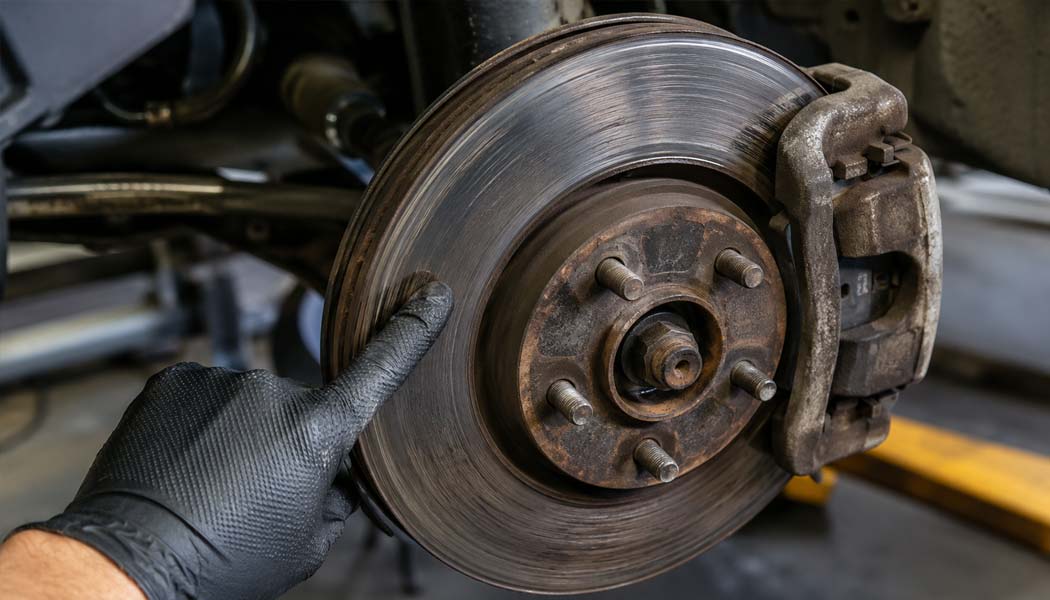
Commercial vans use larger brake components than passenger cars, specifically because of the higher demands. Larger rotors, thicker pads, heavier calipers and more robust hydraulic circuits are all standard. But larger does not mean slower to wear. It means designed for higher loads. When those loads are sustained daily at or near the system's limits, wear accelerates in proportion.
Fiat Ducato, Peugeot Boxer and Citroën Relay vans also integrate their brake systems with ABS, electronic stability control and load-sensing systems that adjust brake bias based on vehicle weight. These electronic systems add another layer of diagnostic complexity. A brake problem in one of these vans is not always just a pad or rotor issue. It can involve sensors, modules and calibration.
How Stop-Start Driving Accelerates Wear
Every brake application converts kinetic energy into heat. In stop-start urban driving, the brakes rarely get an opportunity to dissipate that heat fully before the next application. Heat soak builds progressively through the day. Brake fluid absorbs moisture over time, and elevated operating temperatures accelerate that process, lowering the fluid's boiling point. Once brake fluid starts boiling under heavy use, pedal feel becomes spongy and stopping distances increase.
Rotors warp when subjected to repeated thermal cycling without sufficient cooling time. The symptom is brake pedal vibration under application, particularly at higher speeds. Most Brisbane trades operators running tight delivery schedules will recognise this: the van that feels fine in the morning but develops a vibration through the brake pedal by mid-afternoon.
A loaded van doing suburban deliveries in Brisbane can apply the brakes four to five times more per day than a passenger car on a standard commute. The wear rate reflects that exactly.
How Load Weight Affects Brake Wear
Cargo weight is the single biggest variable in brake wear for commercial vans. The relationship is not linear. Doubling the load does not double the brake wear: it increases the heat generated per stop, which accelerates pad and rotor degradation at a faster rate. A van consistently operating at 80-100% of its payload capacity will go through brake components significantly faster than the same van running at 40-50% capacity.
| Load Condition | Braking Force Required | Heat Generated per Stop | Estimated Pad Life Impact |
|---|---|---|---|
| Empty van (driver only) | Baseline | Baseline | Maximum pad lifespan |
| 50% payload capacity | Moderate increase | Moderate increase | Roughly 15-20% reduction |
| 80% payload capacity | Significant increase | Significant increase | Roughly 30-40% reduction |
| At or near maximum GVM | Maximum system demand | Highest heat exposure | Up to 50% reduction in pad life |
The practical implication for Brisbane fleet operators is that brake inspection intervals based on odometer readings alone are inadequate. A van doing 500 kilometres of light delivery work is not comparable to a van doing 500 kilometres of heavy construction site runs. Both cover the same distance. The brake wear is not the same.
Uneven Load Distribution
Load distribution matters as much as total weight. A van loaded heavily at the rear shifts weight rearward, which changes the brake bias. The front brakes, which normally handle around 60 to 70% of braking force under normal conditions, may receive less load while the rear brakes work harder than designed. This creates uneven wear patterns across the axles and can cause premature failure on one side of the vehicle before the other side shows any visible wear.
The vans we see with the most irregular brake wear are almost always running unbalanced loads. One side of the axle is worn to the backing plate while the other still has plenty of material. The load, not the kilometres, is doing the damage.– Neville Wall, East Coast Commercial Service Centre
Common Signs of Brake Wear in Commercial Vans
Brake wear rarely announces itself dramatically. Most warning signs appear gradually and are easy to attribute to other causes or simply adapt to without noticing the change. By the time a driver reports something clearly wrong, the wear has usually progressed well beyond where an inspection should have happened.
| Warning Sign | Likely Cause | Action Required |
|---|---|---|
| Squealing under light braking | Pad wear indicator contacting rotor | Inspect pads immediately |
| Grinding under braking | Pad material fully worn, metal on rotor | Off road, urgent repair |
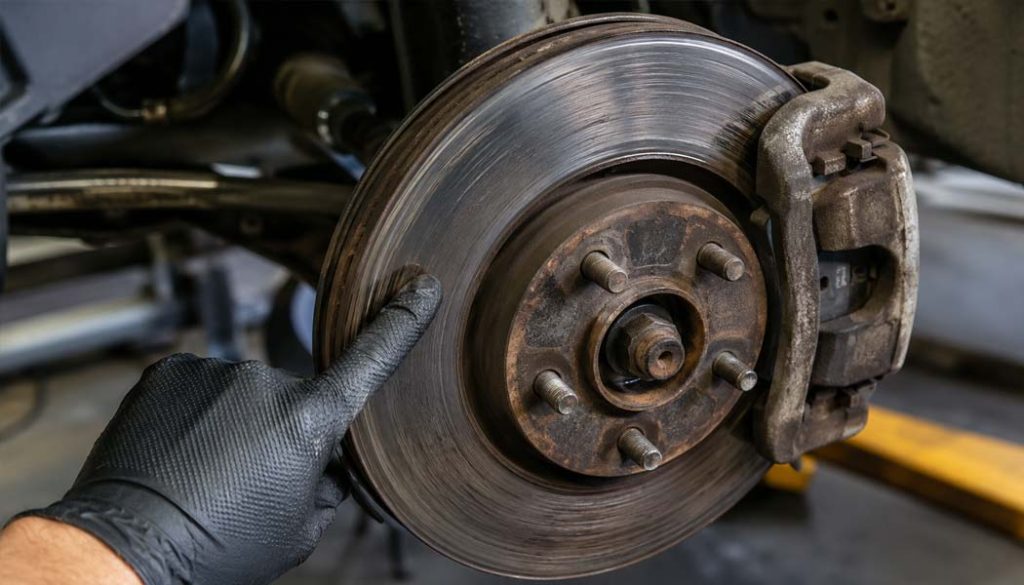
| Pedal vibration at higher speeds | Warped rotors from heat cycling | Rotor inspection and likely replacement |
| Longer stopping distances | Pad wear, fluid degradation, or rotor damage | Full brake system inspection |
| Spongy or low pedal feel | Brake fluid contamination or air in system | Fluid test and bleed |
| Van pulling to one side under braking | Uneven pad wear, seized caliper | Caliper and pad inspection both sides |
| Brake warning light | Pad sensor, fluid level, or ABS fault | Diagnostic scan and inspection |
Why Ignoring Early Signs Costs More
Worn pads that are not replaced damage rotors. Rotors that are scored or grooved cannot be reused and require replacement. A pad set that costs a few hundred dollars turns into a pad and rotor job when the inspection is deferred. A seized caliper that is not caught damages both the pad and rotor on that corner, and can cause uneven braking that stresses wheel bearings and suspension components on the opposite side.
The repair cost hierarchy in brake maintenance is steep. Catching wear at the pad stage is always the least expensive outcome. Each level of deferral multiplies the cost of the repair.
How Much Wear Is Your Van Accumulating?
Use the sliders below to get a rough indication of how quickly your van's brakes are likely wearing based on your actual operating conditions.
Brake Replacement Intervals for Commercial Vans
There is no single correct brake replacement interval for commercial vans. Manufacturer guidelines provide a starting point, but actual wear depends on operating conditions to a degree that makes mileage-only scheduling unreliable for fleet operators.
| Operating Profile | Recommended Pad Inspection | Fluid Change | Full Brake Check |
|---|---|---|---|
| Light use, mostly highway | Every 30,000-40,000 km | Every 2 years | At each service |
| Mixed urban delivery, moderate load | Every 20,000-25,000 km | Every 18 months | Every 6 months |
| Heavy urban delivery, high load | Every 12,000-15,000 km | Every 12 months | Every 3-4 months |
| Construction/trades, max payload daily | Every 10,000 km or 3 months | Every 12 months | Every 3 months minimum |
Brake fluid deserves specific attention. Most fleet operators replace pads and rotors on a visible wear basis but overlook fluid condition entirely. Brake fluid is hygroscopic, meaning it absorbs moisture from the atmosphere over time. As moisture content increases, the fluid's boiling point drops. In a heavily used commercial van, degraded fluid can reach boiling point during a long descent or repeated emergency stops, causing temporary brake fade. A simple fluid moisture test at each service identifies this before it becomes a safety issue.
ABS and Electronic Brake Systems in Modern Vans
Modern Fiat, Peugeot and Citroën vans integrate ABS, electronic brakeforce distribution (EBD) and electronic stability control with the braking system. These systems rely on wheel speed sensors, the ABS module and the ECU to function correctly. A faulty wheel speed sensor does not just disable ABS. It can affect EBD, which adjusts brake force front to rear based on load. An EBD system that cannot read the rear axle correctly may over-brake the rear wheels under load, causing instability.
ABS and electronic brake system faults often do not present as obvious brake problems. The van may stop normally under light braking. The fault only manifests under heavy or emergency braking conditions. This is one reason a brake warning light in these vans should always be followed up with a diagnostic scan alongside the physical inspection, not just a visual check of pad thickness. For more on how electronic systems interact with vehicle safety, our post on fleet van diagnostics covers this in detail.
If your van is showing any brake warning signs, or it has been more than six months since a brake inspection, do not leave it until the next scheduled service. Book a brake inspection with East Coast Commercial Service Centre in Acacia Ridge and get a clear picture of where your system stands.
Book a Brake InspectionPreventive Brake Servicing Reduces Fleet Downtime
For fleet operators, a brake failure is not just a safety event. It is an operational one. A van taken off the road unexpectedly creates a cascade: jobs cannot be completed, deliveries are delayed, other vehicles in the fleet get pushed harder to compensate, and the repair often costs more because it is done under urgency rather than at a planned service visit.
Preventive brake maintenance creates predictability. When brake condition is monitored consistently, replacement is planned rather than reactive, costs are known in advance, and downtime is scheduled rather than forced. For a business running three or four vans, the difference between reactive and preventive brake management can represent thousands of dollars a year in avoided emergency repair costs and lost revenue.
A structured service schedule that includes brake inspection at every interval, alongside the Fiat and Peugeot and Citroën specialist servicing we carry out at Acacia Ridge, is the most reliable way to keep brake-related downtime out of your operational planning.
Frequently Asked Questions
Why do commercial van brakes wear faster than passenger cars?
Commercial vans carry significantly more weight, brake more frequently during the day, and rarely allow the brake system to cool fully between applications. A delivery van in Brisbane suburban traffic may brake 200 to 300 times per day under load. The heat generated by that volume of braking, repeated across a full working week, accelerates pad and rotor wear at a rate that has no equivalent in private vehicle use.
How often should fleet van brakes be inspected?
For vans in heavy urban commercial use, a brake inspection every 10,000 to 15,000 kilometres or every three months is appropriate, whichever comes first. Vans operating at or near maximum payload daily should be inspected more frequently. Odometer-only scheduling is not reliable for commercial brakes because load weight and stop frequency affect wear more than distance alone.
What causes brake overheating in commercial vans?
Repeated braking under heavy loads without sufficient cooling time between applications is the primary cause. Degraded brake fluid with high moisture content also contributes by lowering the fluid's boiling point. Towing and descending hills extend the heat load significantly. Brake fade, the temporary loss of braking effectiveness when the system overheats, is the direct result and represents a genuine safety risk in a fully loaded van.
Can heavy loads damage the brake system faster?
Yes, and the relationship is more pronounced than most operators expect. A van running at maximum payload generates significantly more heat per braking event than the same van running light. Pads wear faster, rotors are more susceptible to warping, and brake fluid degrades more quickly under the higher operating temperatures. NHVR data consistently shows brake defects as the leading compliance issue in Australia's commercial fleet, and load management is a major contributing factor.
What are the early warning signs of brake wear in commercial vans?
Squealing under light braking is usually the first indicator, caused by the pad wear indicator touching the rotor. Pedal vibration at higher speeds suggests warped rotors. A spongy or low pedal feel indicates fluid contamination or air in the system. The van pulling to one side under braking points to a seized caliper or uneven pad wear. Any of these should prompt an inspection rather than a wait-and-see approach.
East Coast Commercial Service Centre specialises in Fiat, Peugeot and Citroën commercial van servicing at our workshop in Acacia Ridge, Brisbane. Brake inspections are carried out as part of every service visit using manufacturer-recommended procedures. If your van is due for a brake check or showing any warning signs, book online or call us on (07) 3276 4733.
Other posts you will find helpful